Perennial food
Fruits
Fruit changes the time horizon of a garden. Annual vegetables teach in months. Fruit teaches in years.
Planting, pruning, mulching, and patience matter. A fruit planting can be one of the most productive parts of a home garden, but it asks for decisions that last longer than a season.
Start with establishment
The first job is not harvest. The first job is establishment.
Young fruit plants need water, mulch, root development, protection from competition, and enough pruning or training to create a useful structure. A weak first year often shows up later as slow bearing, poor growth, or a plant that never becomes easy to manage.
Before choosing currants or gooseberries
Massachusetts prohibits black currants and their hybrids. Gooseberries require a permit and are restricted in some towns. Check MDAR’s current rules before ordering plants. These reference pages are not planting approval.
Fruit guide index
| Fruit | Type | Main care focus |
|---|---|---|
| Apples | Tree fruit | Pruning, thinning, pest monitoring, and young-tree watering |
| Pears | Tree fruit | Training, pruning, fire blight awareness, and harvest timing |
| Plums | Tree fruit | Pruning, thinning, brown rot prevention, and wildlife protection |
| Sour Cherries | Tree fruit | Open structure, harvest timing, and bird protection |
| Blueberries | Small fruit | Acid soil, mulch, steady moisture, and patient establishment |
| Raspberries | Cane fruit | Cane renewal, trellising, pruning type, and harvest discipline |
| Black Currants | Shrub fruit | Renewal pruning, mulch, and summer moisture |
| Gooseberries | Shrub fruit | Airflow, pruning, and harvest access around thorny canes |
| Strawberries | Small fruit | Runner management, mulch, renovation, and clean harvest |
| Ground Cherries | Annual fruiting crop | Warm soil, spacing, fallen-husk harvest, and volunteer management |
Plan for the long term
Apples, pears, plums, and cherries need thoughtful pruning before they become difficult to manage.
Small fruit Match soil to cropBlueberries, currants, gooseberries, and strawberries succeed when soil pH, mulch, and moisture fit the plant.
Cane fruit Renew bearing woodRaspberries and similar cane crops depend on knowing which canes fruit and which canes should be removed.
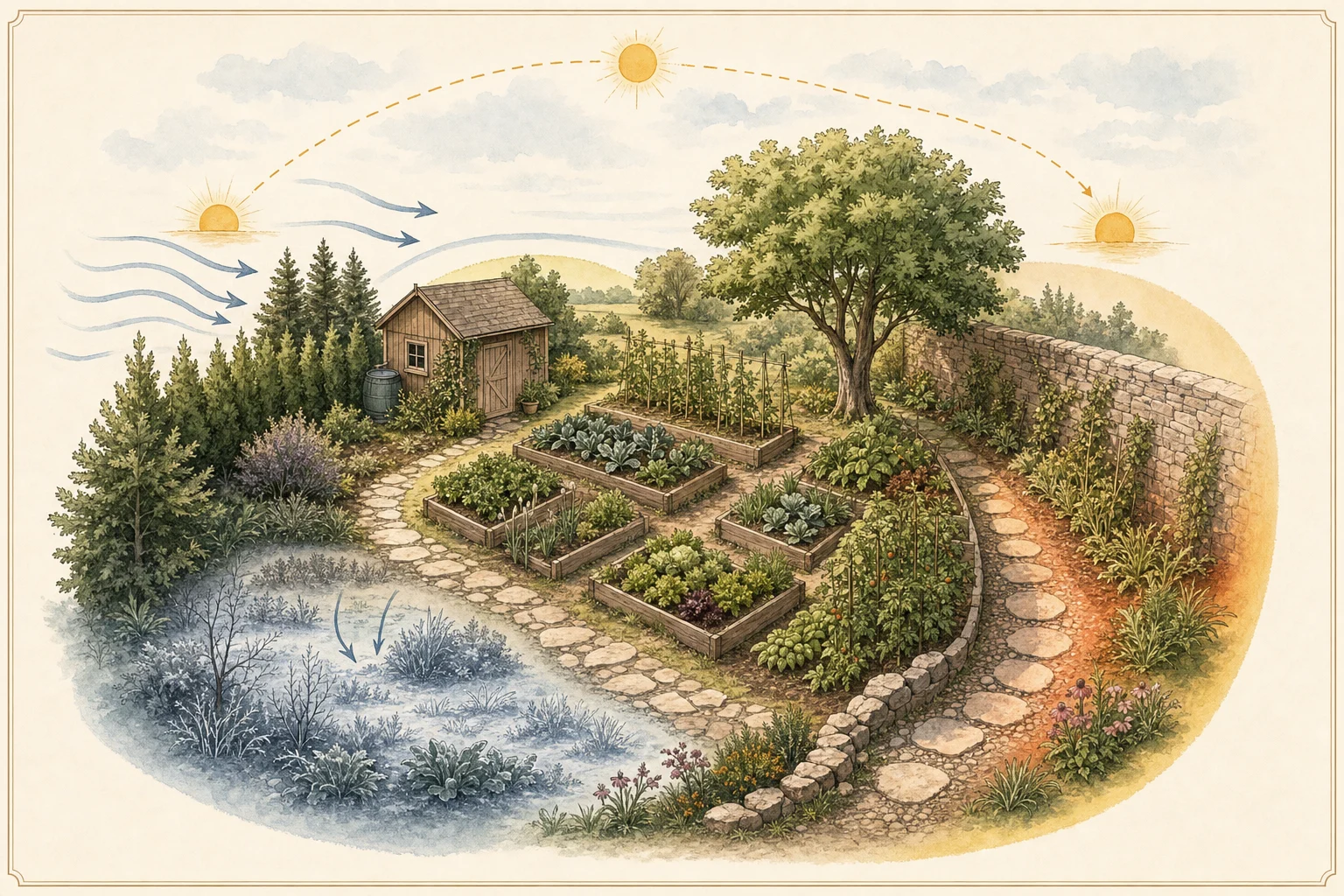
Site Read microclimatesCold pockets, reflected heat, wind, shade, and water access determine whether a planting thrives for years.
Field notes
For fruit, record years, not just dates. Note planting year, rootstock if known, pruning decisions, first bloom, first real harvest, pest timing, and winter injury. Perennial records become more valuable every season.