Understanding Your Climate
Climate is the frame around the garden.
It determines what can be grown, when seeds can be started, when transplants can safely go outside, and how much risk a gardener should accept in spring and fall.
Hardiness zones matter, but they are only the beginning.
Hardiness is not the whole story
USDA hardiness zones describe average annual extreme minimum temperatures. They help determine which perennial plants may survive winter.
They do not tell you how hot the summer will be, how humid the air is, when the last frost arrives, or whether your garden sits in a windy hollow.
For annual vegetables, frost dates and growing season length are often more useful than the zone number alone.
Compare the seasons
First frost and last frost
The last frost in spring is not a promise. It is a probability.
The same is true of the first frost in autumn.
A gardener should know the average date, but also plan for variation. Tender crops such as tomatoes, peppers, basil, cucumbers, beans, and squash should not be rushed into cold soil simply because the calendar feels impatient.
Microclimates
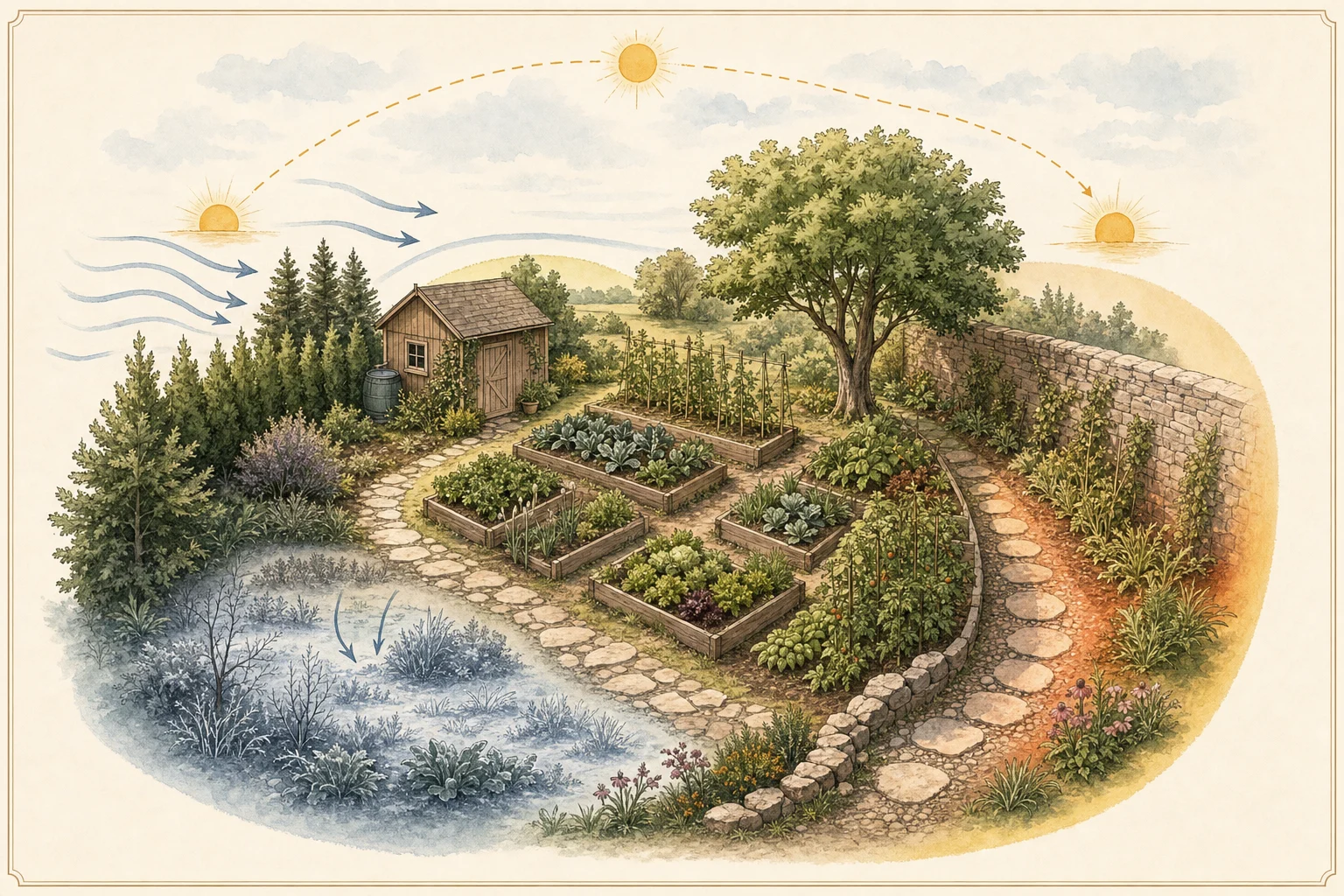
Every garden contains smaller climates.
A south-facing wall may warm early. A low area may collect cold air. A bed near stone may retain heat. A shady edge may stay moist long after the rest of the garden dries.
These differences can be used.
Plant heat-loving crops where warmth gathers. Plant cool-season greens where afternoon shade protects them. Avoid placing vulnerable fruit blossoms in frost pockets.
Wind, water, and exposure
Wind dries soil and stresses young plants.
Standing water suffocates roots.
Shade reduces growth but can protect cool-season crops in summer.
A garden plan should be built around these realities rather than against them.
Field notes
Local observations help you interpret station records and regional maps.
Write down the first daffodil, the first asparagus spear, the first hard frost, the first heat wave, and the bed that dries fastest.
Over time, these notes show where your site differs from the surrounding region.