Growing Black Currants
Massachusetts: do not plant black currants. The state does not permit black currants or their hybrids, including jostaberries. This page is background growing information for places where cultivation is allowed, not a Massachusetts planting recommendation. Check the current Massachusetts Department of Agricultural Resources guidance. Reviewed September 23, 2026.
At a glance
| Question | Practical answer |
|---|---|
| Plant type | Perennial shrub fruit |
| Light | Full sun to partial shade; more sun usually means better fruit |
| Soil | Moist, fertile, well-drained soil |
| Spacing | Often 3-5 ft apart, depending on variety |
| Pollination | Many are self-fruitful, but variety choice still matters |
| Main work | Mulch, water, renewal pruning, harvest promptly |
| Common failure | Old crowded wood and drought stress |
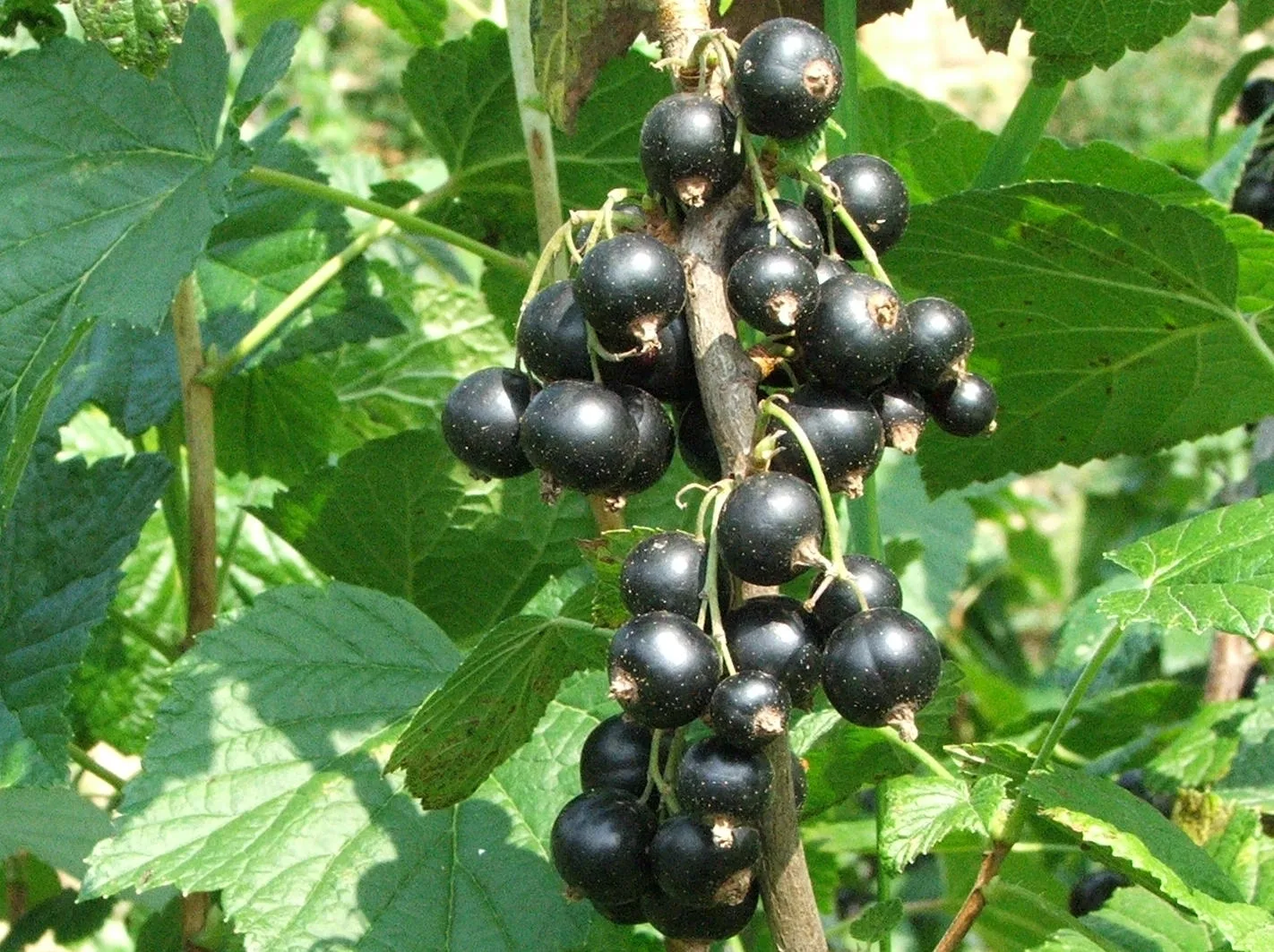
Black currants are compact, productive shrub fruits with a flavor that is more intense than sweet. They are useful for jam, syrup, baking, drying, wine, and fresh eating if you like their aromatic bite.
Planting restrictions address white pine blister rust. A claim of disease resistance does not override the Massachusetts restriction above.
Site and soil
Currants tolerate cooler conditions and a little shade better than many fruit crops, but deep shade reduces yield and airflow. They prefer soil that holds moisture without staying waterlogged.
Mulch is especially helpful. It moderates soil temperature, holds moisture, and reduces weeds around shallow roots. Keep mulch away from the crown to avoid rot.
Planting
Plant dormant bare-root currants in early spring or potted plants during mild weather. Set plants at the depth recommended for the nursery stock. Water well and prune back weak or damaged growth.
Leave enough room to harvest around the plant. A mature currant loaded with fruit is easier to pick when the shrub has been pruned into an open shape.
Pruning
Black currants are managed by renewal pruning. The most productive wood is usually young, so the plant should be encouraged to produce new canes while older, weaker canes are removed.
Each dormant season, remove:
- dead or broken canes;
- low canes that drag on the ground;
- weak spindly growth;
- the oldest canes if the plant is crowded;
- diseased or damaged wood.
The goal is a shrub with a mix of cane ages and enough room for light and airflow.
Water and fertility
Black currants dislike drought during fruit development. Water deeply during dry spells, especially in sandy soil.
Use compost and modest fertility. Too much nitrogen can produce lush growth that is more disease-prone and harder to manage.
Harvest
Harvest when berries are fully colored and flavorful. Clusters do not always ripen evenly. For processing, pick clusters efficiently and sort later. For fresh eating, taste first.
Black currants freeze well and are often better as an ingredient than as a snack fruit.
Common problems
| Problem | Watch for | First response |
|---|---|---|
| Powdery mildew | Whitish leaf coating | Improve airflow; choose resistant varieties |
| Leaf spots | Spotted leaves, early leaf drop | Sanitation and pruning |
| Cane aging | Small fruit on old crowded wood | Renewal prune in dormancy |
| Bird pressure | Missing ripe berries | Net before harvest |
Field notes
Record variety, planting date, harvest window, pruning age mix, disease symptoms, bird pressure, and how the fruit was used. Currants become easier to manage when you track which canes are aging out.