Growing Blueberries
At a glance
| Question | Practical answer |
|---|---|
| Plant type | Perennial fruiting shrub |
| Light | Full sun for best yield; partial shade reduces production |
| Soil pH | Acidic, usually about 4.5-5.5 |
| Drainage | Moist but well drained; raised beds help on heavy or wet soil |
| Spacing | 4-6 ft for individual bushes; 2-3 ft for hedgerows; wider rows for access |
| Pollination | Plant more than one compatible variety for better yield and berry size |
| Water | Consistent moisture; shallow roots dry quickly |
| Mulch | 2-4 in of pine bark, wood chips, pine needles, or other organic mulch |
| First real crop | Often modest for 2-3 years; full production takes patience |
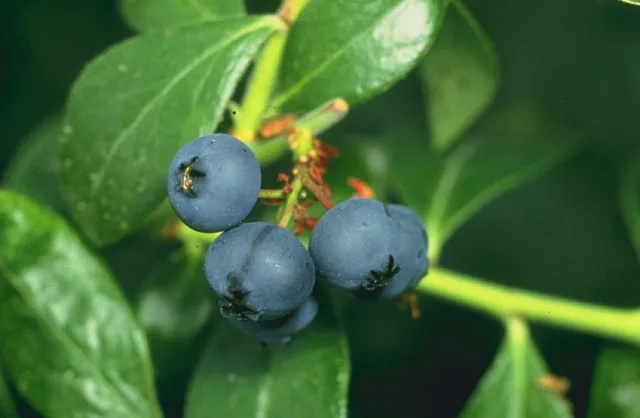
Blueberries are not ordinary shrubs that happen to make fruit. They are acid-loving, shallow-rooted plants that succeed only when the planting site is built around their needs.
The most important decision is made before planting. If the soil pH, drainage, mulch, and irrigation plan are wrong, the plant may survive for years while remaining weak, pale, and unproductive. If those foundations are right, a blueberry planting can become one of the most dependable and beautiful parts of the garden.
Start with the soil, not the plant
Blueberries need acidic soil because their roots take up nutrients differently than many vegetable crops and tree fruits. In neutral or alkaline soil, the plant can show chlorosis, weak growth, and poor cropping even when nutrients are present.
Do a soil test before planting. Guessing is risky because pH changes are slow and soil texture affects how much amendment is needed. If the pH is too high, elemental sulfur is usually worked in months before planting. Peat moss, pine bark fines, and other acidic organic materials can help build the planting zone, but they should not be treated as a substitute for testing.
If your native soil is heavy clay, compacted, or seasonally wet, do not dig a bathtub-shaped hole and fill it with soft organic material. That can create a perched wet pocket around the roots. A raised mound, ridged row, or raised bed is usually safer because blueberries need moisture and air at the same time.
Choosing a site
Blueberries want full sun, reliable water, and excellent drainage. They also need protection from perennial weeds and lawn competition because their roots are shallow and fine.
Good blueberry sites have:
- at least 6 hours of direct sun;
- soil that does not stay saturated after rain;
- easy access to irrigation;
- room for more than one variety;
- mulch that can be refreshed without burying the crown;
- enough space to net the plants against birds.
Avoid planting near large trees. Tree roots compete for water, tree canopies reduce light, and fallen leaves can make harvest and bird netting harder.
Planting
Plant in early spring where winters are cold. Fall planting can work in many climates when soil remains workable and plants have time to root before severe weather. Container-grown plants give you a little more flexibility, but they still need careful watering after planting.
Dig a hole wider than the root ball, not dramatically deeper. Blueberry roots live close to the surface, so planting too deep is a common mistake. Loosen the outer roots if they circle the pot. Set the plant slightly high, backfill with amended native soil, water thoroughly, and mulch immediately.
| Planting decision | Why it matters |
|---|---|
| Wide hole | Encourages roots to move into loosened soil |
| Slightly high crown | Reduces risk of settling into a wet depression |
| Mixed amendments | Avoids a pure organic pocket that behaves differently from surrounding soil |
| Immediate mulch | Protects shallow roots from heat, drought, and weed competition |
| Flower removal on young plants | Pushes energy into roots and shoots instead of an early weak crop |
Pollination and variety choice
Many blueberries can set some fruit alone, but yields and berry size usually improve when more than one compatible variety blooms at the same time. Planting early, midseason, and late cultivars can also extend harvest.
Match the type to your climate. Northern highbush, southern highbush, rabbiteye, half-high, and lowbush blueberries are not interchangeable. Heat, winter cold, chill hours, soil adaptation, and plant size all matter.
For a general home garden rule:
- choose varieties recommended by your local extension service or reputable regional nursery;
- plant at least two that bloom together;
- leave space for mature size, not nursery-pot size;
- choose a harvest sequence that fits how often you can pick.
Water and mulch
Blueberries have shallow roots, so they suffer quickly when the top soil dries. They also dislike saturated soil. The target is evenly moist soil, not mud.
Drip irrigation, soaker hose, or careful hand watering is usually better than overhead watering. Mulch helps even out soil temperature and moisture. Pine bark, wood chips, aged sawdust, pine needles, or shredded leaves can all be useful if they do not mat into a water-shedding layer.
Refresh mulch as it decomposes, but keep it from piling against the stems. A deep collar of wet mulch around the crown can invite rot and rodent damage.
Fertility
Blueberries are sensitive to overfertilization. Do not dump fertilizer into the planting hole. Wait until the plant has begun active growth, then use modest applications suited to acid-loving plants.
Too much nitrogen can create soft growth that is more vulnerable to winter injury and disease. Too little nitrogen can leave plants pale and stagnant. Let soil tests, leaf color, shoot growth, and local extension guidance shape the rate.
Pruning and establishment
The first years are about building a bush, not maximizing fruit. Remove flowers on very young plants if they are weak or newly planted. Keep the plant watered, weed-free, and mulched.
Mature blueberries are pruned in the dormant season. Remove dead, damaged, weak, low, crossing, or very old canes. The goal is renewal: a steady supply of strong young canes and enough open structure for light and airflow.
| Plant age | Main pruning idea |
|---|---|
| Planting year | Reduce stress; remove weak growth and flower buds if needed |
| Years 2-3 | Build structure; do not overcrop a small plant |
| Mature plants | Remove old or weak canes and encourage productive renewal growth |
Harvest
Blueberries color before flavor is fully developed. A berry that has just turned blue may still be tart. Let fruit hang until it is fully blue and releases easily.
Birds often discover the crop before the gardener does. Netting is the most reliable protection for a small planting, but it needs a frame or careful setup so birds do not become tangled and branches are not crushed.
Pick regularly. Highbush blueberries are often picked every few days during peak ripening; some rabbiteye types improve if allowed to hang a little longer. Taste is the final test.
Common problems
| Symptom | Likely pattern | First response |
|---|---|---|
| Yellow leaves with green veins | Soil pH too high or nutrient uptake problem | Test pH before adding random fertilizer |
| Weak growth after planting | Drought, wet roots, poor pH, or weed competition | Check moisture, drainage, mulch, and pH |
| Small crop on young plant | Normal establishment or poor pollination | Give it time; plant compatible varieties |
| Berries disappear | Birds | Net before ripening starts |
| Root decline | Saturated soil or overly frequent irrigation | Improve drainage and watering rhythm |
Field notes
Record pH test results, amendments, planting date, varieties, bloom overlap, mulch type, irrigation pattern, bird pressure, first harvest date, and winter injury. Blueberries reward gardeners who keep records because small soil and water differences show up clearly over time.
Sources consulted
- NC State Extension: Growing Blueberries in the Home Garden
- Fall Creek Farm & Nursery: How to Plant and Grow Blueberries
- joegardener: Plant & Grow Blueberries Successfully
- The Old Farmer's Almanac: Blueberries