Living foundation
Soil
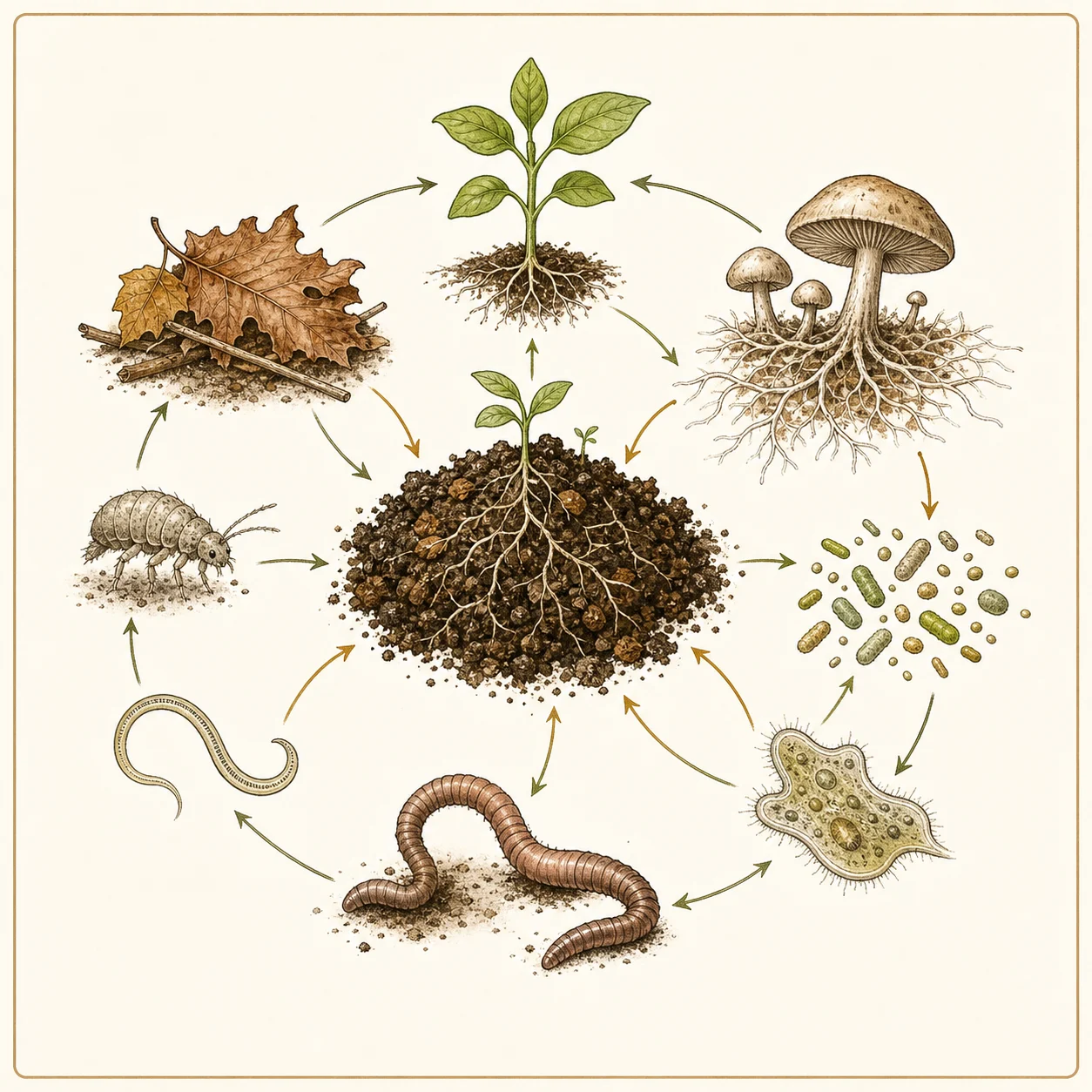
Soil is structure, biology, minerals, organic matter, air, water, drainage, compaction, and time.
Most garden problems are easier to solve by improving soil conditions than by treating symptoms after plants are stressed.
Soil guide index
| Guide | Use it for |
|---|---|
| Building Healthy Soil | Understanding soil as a living, physical system |
| Soil Testing | Interpreting pH, nutrients, organic matter, and amendment decisions |
| Compost as a Soil Practice | Using compost without treating it as magic |
| Mulch and Soil Cover | Protecting the soil surface and feeding soil life |
| Gardening in Clay Soil | Working with fine-textured soil without destroying structure |
| Gardening in Sandy Soil | Building water and nutrient-holding capacity in fast-draining soil |
Work from function
Improve aggregation, root access, water movement, and the biological activity that makes nutrients available.
Evidence Test before amendingUse pH, organic matter, and nutrient data to make better decisions instead of guessing from plant symptoms alone.
Protection Keep soil coveredMulch moderates temperature, reduces evaporation, protects structure, and feeds soil organisms over time.
Organic matter Use compost wellCompost is a practice, not a cure-all. Apply it where it supports structure, biology, and realistic nutrient plans.
Start with what the soil does
A good garden soil is not necessarily dark, fluffy, or purchased in a bag. It is soil that performs.
It should anchor plants, accept water, drain excess water, hold enough moisture for roots, exchange nutrients, support soil organisms, and allow roots to explore. When one of those functions fails, plants show stress.
Field notes
Record soil behavior after weather events. The day after heavy rain often teaches more than a dry afternoon with a trowel.