Growing Pears
At a glance
| Question | Practical answer |
|---|---|
| Plant type | Grafted tree fruit |
| Light | Full sun |
| Soil | Deep, well-drained soil |
| Pollination | Most need another compatible pear variety |
| Growth habit | Often upright; training matters early |
| Main concern | Fire blight, especially on susceptible varieties |
| Harvest | Pick mature-firm; ripen indoors for best texture |
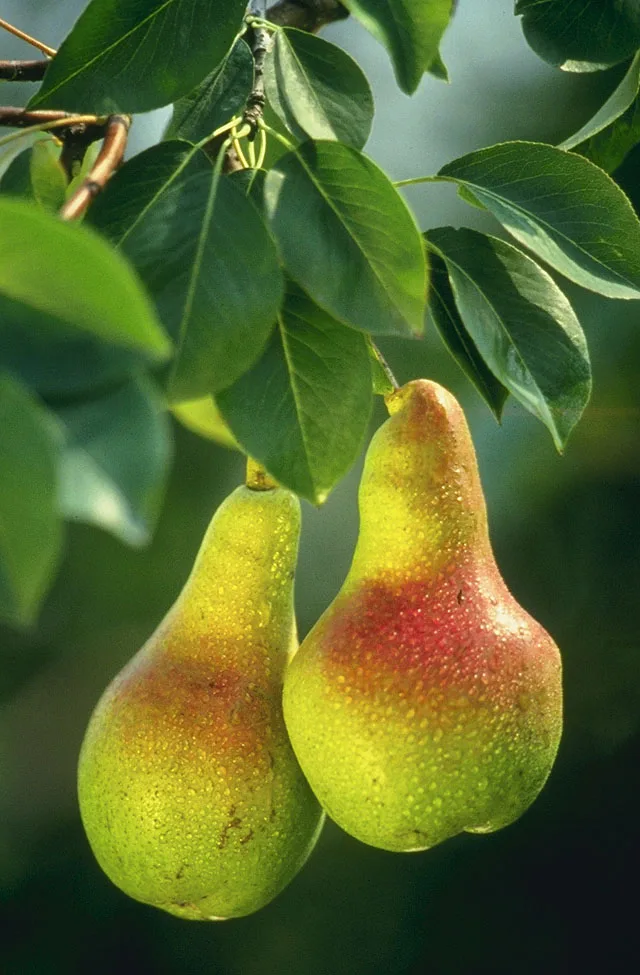
Pears are elegant trees, but they are not simply apples with different fruit. They often grow more upright, can be sensitive to fire blight, and are usually harvested before they are soft.
The key to good pears is long-term structure: choose the right varieties, provide a compatible pollen source, train a strong canopy, avoid pushing too much soft growth, and learn when to pick fruit for ripening off the tree.
European, Asian, and regional adaptation
European pears are commonly ripened after harvest. Asian pears are often crisp and are usually allowed to ripen more fully on the tree. Both need site suitability and pollination planning.
Cold hardiness, bloom time, fire blight resistance, and local disease pressure matter more than catalog romance. Choose cultivars recommended for your region, especially if fire blight is common.
Pollination
Plant at least two compatible pear varieties unless you already have a reliable pollen source nearby. Bloom overlap matters. Some pears have poor pollen or limited compatibility, so check nursery and extension guidance before buying.
| Planting plan | Risk |
|---|---|
| One isolated pear tree | Poor or inconsistent fruit set |
| Two compatible pears with overlapping bloom | Better fruit set |
| Fire blight-susceptible varieties in a high-pressure area | More pruning and crop risk |
Site and planting
Pears need sun and drainage. Avoid frost pockets where blooms are damaged and wet sites where roots decline.
Plant with the graft union above the soil line. Water deeply after planting and mulch the root zone. Keep grass away from young trees because turf competes strongly for water and nutrients.
Training and pruning
Start training while the tree is young. Pears can grow narrow crotches and upright shoots that later split or shade the canopy. Wide branch angles are stronger and easier to manage.
Dormant pruning should remove:
- dead, diseased, or damaged wood;
- crossing or rubbing branches;
- overly upright water sprouts;
- crowded interior growth;
- rootstock suckers below the graft.
Avoid excessive nitrogen and severe pruning that creates a flush of soft succulent shoots. That growth can be more vulnerable to fire blight.
Fire blight awareness
Fire blight can blacken blossoms, shoots, and branches. The classic symptom is a shoot tip that bends like a shepherd's crook. Warm wet bloom periods can increase risk.
Prune infected wood during dry weather and remove cuts well below visible symptoms. Disinfecting tools between cuts is often recommended when pruning active infections. Resistant varieties, open canopies, and restrained fertility are important cultural defenses.
Harvest and ripening
European pears often become mealy if left to soften on the tree. Harvest when fruit is mature but still firm, then ripen indoors. Signs include a slight change in ground color, easy separation when lifted and twisted, and mature seed color depending on variety.
Store firm pears cool, then bring them to room temperature to finish ripening. Check the neck near the stem: when it yields slightly, the pear is ready.
Common problems
| Problem | Watch for | First response |
|---|---|---|
| Fire blight | Blackened blossoms or shoot tips | Prune infected wood; avoid excess nitrogen |
| Poor fruit set | Bloom without fruit | Check pollination compatibility and frost damage |
| Hard fruit that never ripens well | Picked too early or stored poorly | Learn variety-specific maturity cues |
| Broken limbs | Narrow crotches, heavy crop | Train early, thin fruit, support if needed |
Field notes
Record varieties, rootstock, bloom timing, pollen source, fire blight symptoms, pruning dates, harvest date, indoor ripening time, and eating quality. Pear records are especially useful because harvest timing is learned over years.