Building Healthy Soil
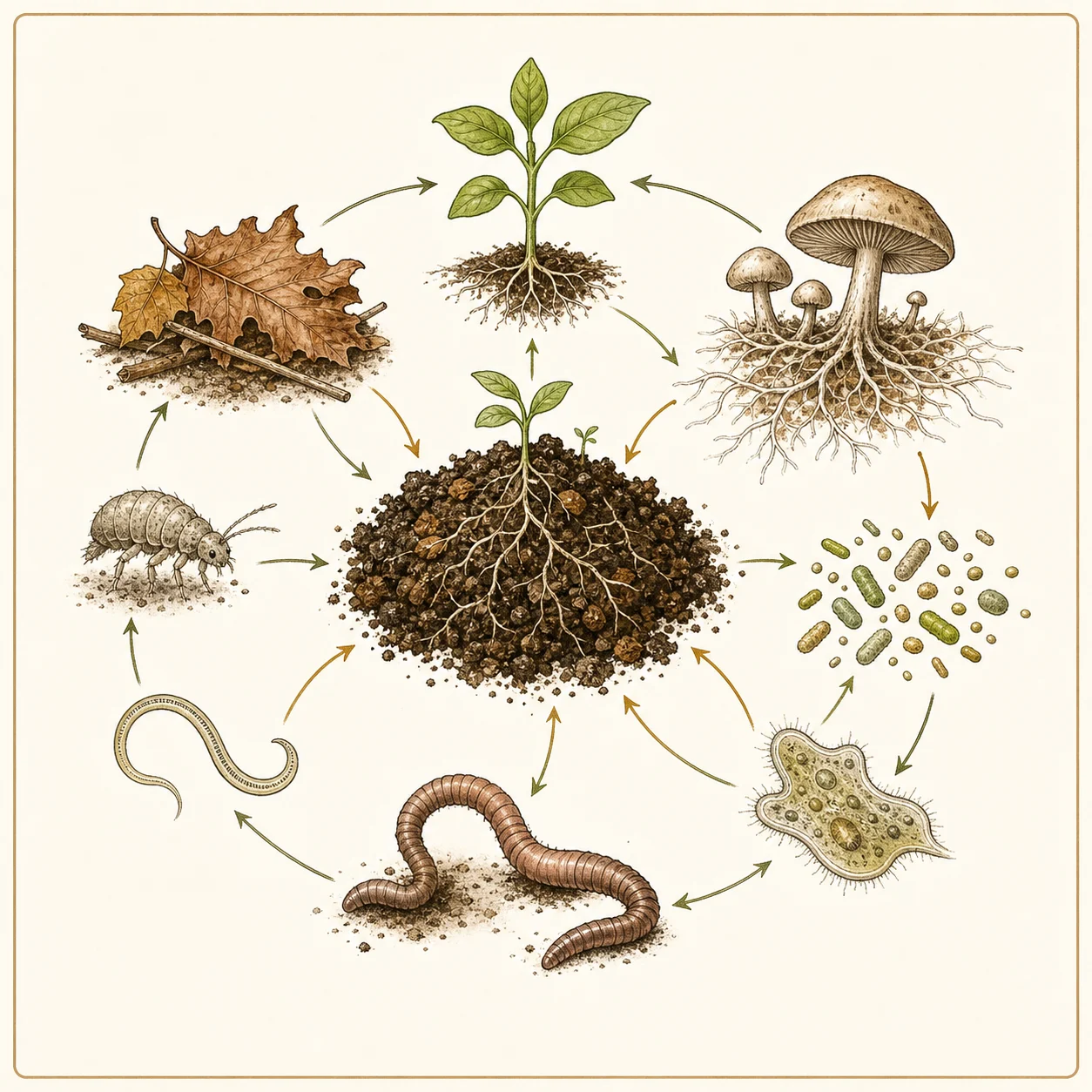
Start with a question you can investigate: does this bed stay wet, dry too quickly, resist a trowel, or produce uneven growth? “Improve the soil” becomes useful when it leads to an observation and a decision.
Separate the evidence
| Evidence | What it helps answer | What it cannot establish alone |
|---|---|---|
| Soil laboratory report | pH, measured nutrients and the lab's recommendations | How water moves through this bed after a storm |
| Repeated moisture observations | Where and when the bed dries or stays wet | A nutrient deficiency |
| Planting and harvest notes | Which plants struggled, and when | The cause without further investigation |
| Amendment record | What material and quantity you added | Whether it caused the next harvest result |
Use the same bed names and observation locations over time. Keep a measured fact separate from your explanation: “water remained here the next morning” is stronger evidence than “bad soil.”
Choose one manageable change
A soil test provides a baseline for chemical questions. Covered soil, living roots and less disturbance are complementary soil-care practices described in Maryland Extension's soil-health guide. Your first intervention should answer the problem you observed rather than combine every available treatment.
For an amendment, record the material and amount. For a change in watering or surface cover, record the date and the area affected. Revisit the bed under comparable conditions and note what still needs explanation.
Follow the question
- Soil testing for sampling and interpreting a report.
- Clay soil and sandy soil for contrasting water behavior.
- Compost quantities for converting bed dimensions into volume.
- Garden Notebook for recording the report date and your observations.
Guidance reviewed September 23, 2026. Local observations do not replace a laboratory test or site assessment.