Watering Wisely
A wet surface can hide dry roots. Before watering again, check where the roots are growing and whether the last rain or irrigation reached them. The aim is steady moisture with room for air, rather than a schedule you follow regardless of the soil.
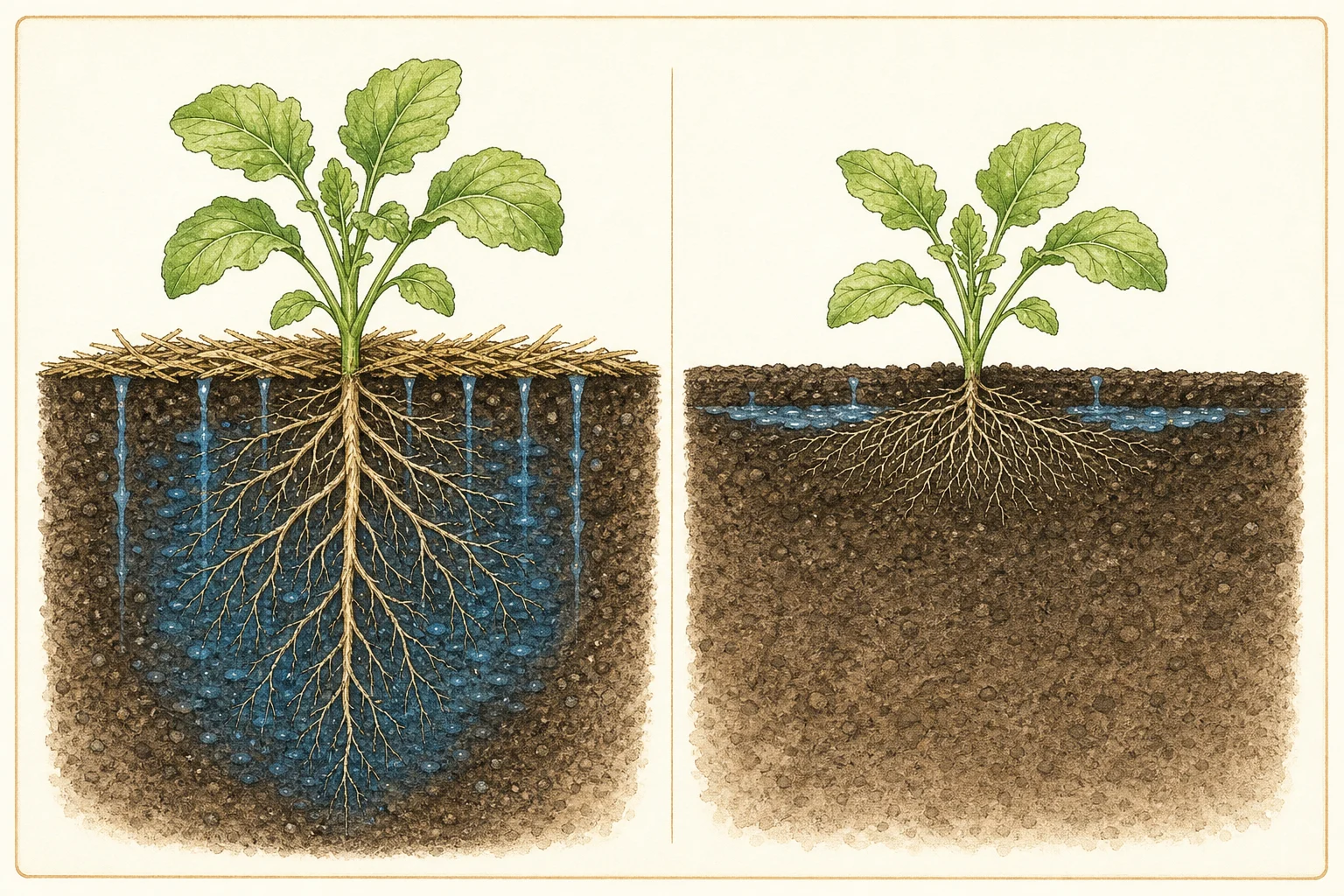
Check the plant stage first
A germinating seed row and an established tomato have different root systems. Seeds and young seedlings need moisture where their small roots can reach it. Larger plants need water reaching a larger root zone. A fixed schedule can miss both needs.
University of Minnesota Extension's irrigation guidance explains why both too little and too much water matter, and why monitoring the soil is more useful than looking only at the surface.
Inspect, water, check again
| What you see | What to check before acting |
|---|---|
| Dry surface | Is soil below it still moist, and how deep are this crop's roots? |
| Wilting leaves | Is the root zone dry, already wet, or recently disturbed? |
| Water running away | Does it enter the bed, or leave along a compacted path? |
| Uneven growth | Do irrigation coverage, shade or soil conditions differ? |
After watering, check whether moisture reached the intended area. Do not assume a wet mulch surface proves the soil below is wet. Record the method and approximate duration or volume so you can adjust the next application.
Compare decisions across the season
Rain, plant size and temperature change the task. Record a rainfall or watering event alongside a specific observation; “watered for ten minutes, then checked beneath the surface” gives you something to revisit. A weekly total alone does not show where the water went.
Record watering in Garden Notebook, review mulch choices, or read the soil guide.