Growing Beets
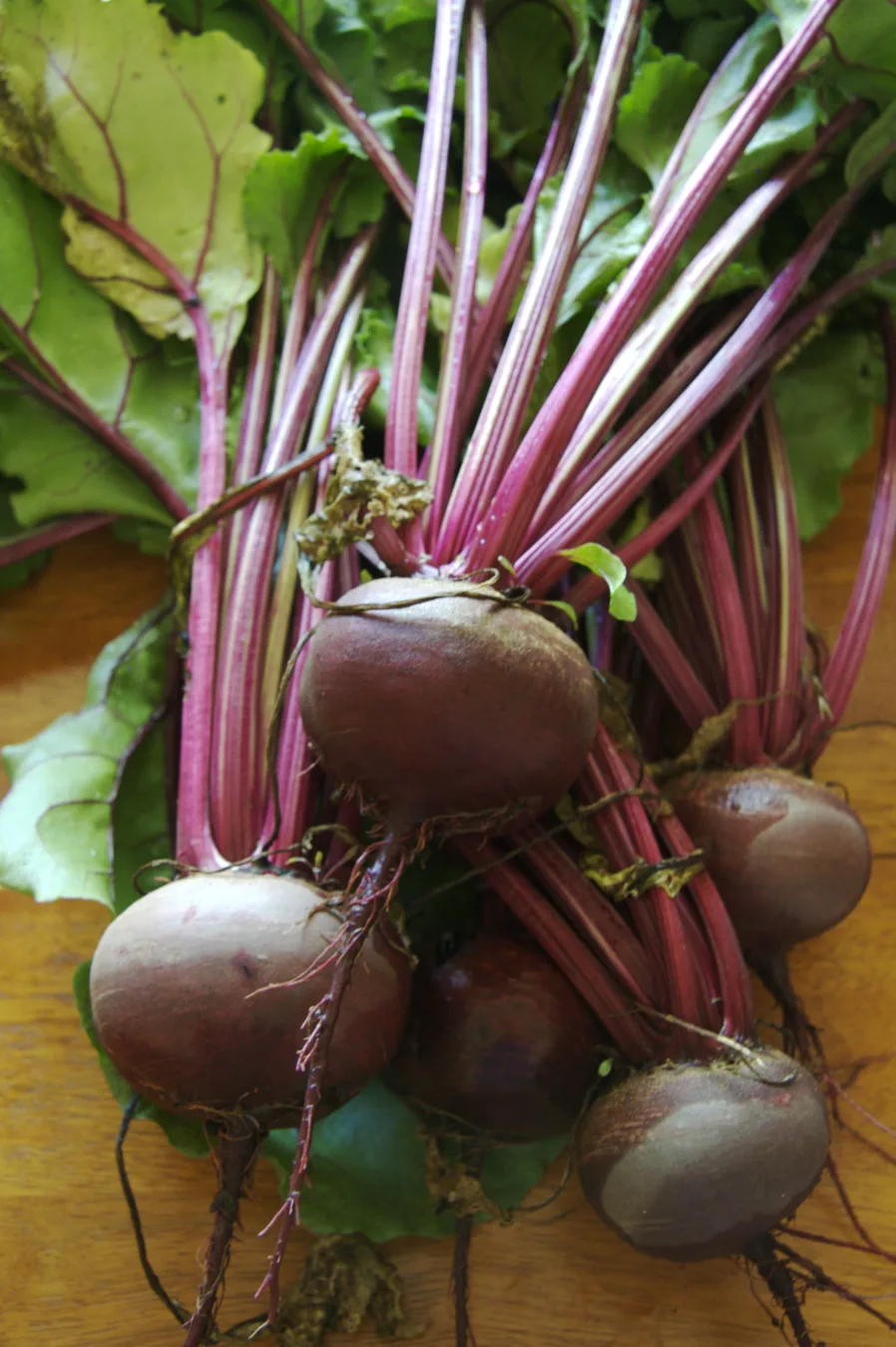
Beets are useful because both the roots and greens can be eaten. They are forgiving when thinned properly.
When to plant
Decide whether you want tender greens, roots or both. Spring and late-summer sowings offer different growing conditions; a small sowing in each can be more useful than a large row that all reaches harvest together.
Make room for the crop
Thin for the harvest you want. A crowded patch may give useful greens but little room for roots to swell. Beet seed can produce clusters of seedlings: compare the actual spaces between plants with the mature-root spacing in the profile.
Water
Keep the seedbed evenly moist while seedlings establish. As roots develop, inspect both a crowded patch and a well-spaced patch before blaming small roots on fertility. Note rainfall and irrigation alongside the size of a pulled sample.
Harvest
Sample roots around 1¼–3 inches across. Harvest reference: University of Minnesota Extension.
Use the maturity estimate to schedule a first inspection. Let the plant’s condition and the harvest you want decide the picking date.
Common problems
Compare roots from the crowded and thinned parts of the row. Record leaf color, root size and the actual distance between plants before changing fertility.
Use the disease-condition checklist to decide what to inspect and which cultural conditions to improve. It does not identify a pathogen from these observations.
Field notes
Each beet seed is often a cluster. Thinning is not optional if good roots are the goal.