Growing Cucumbers
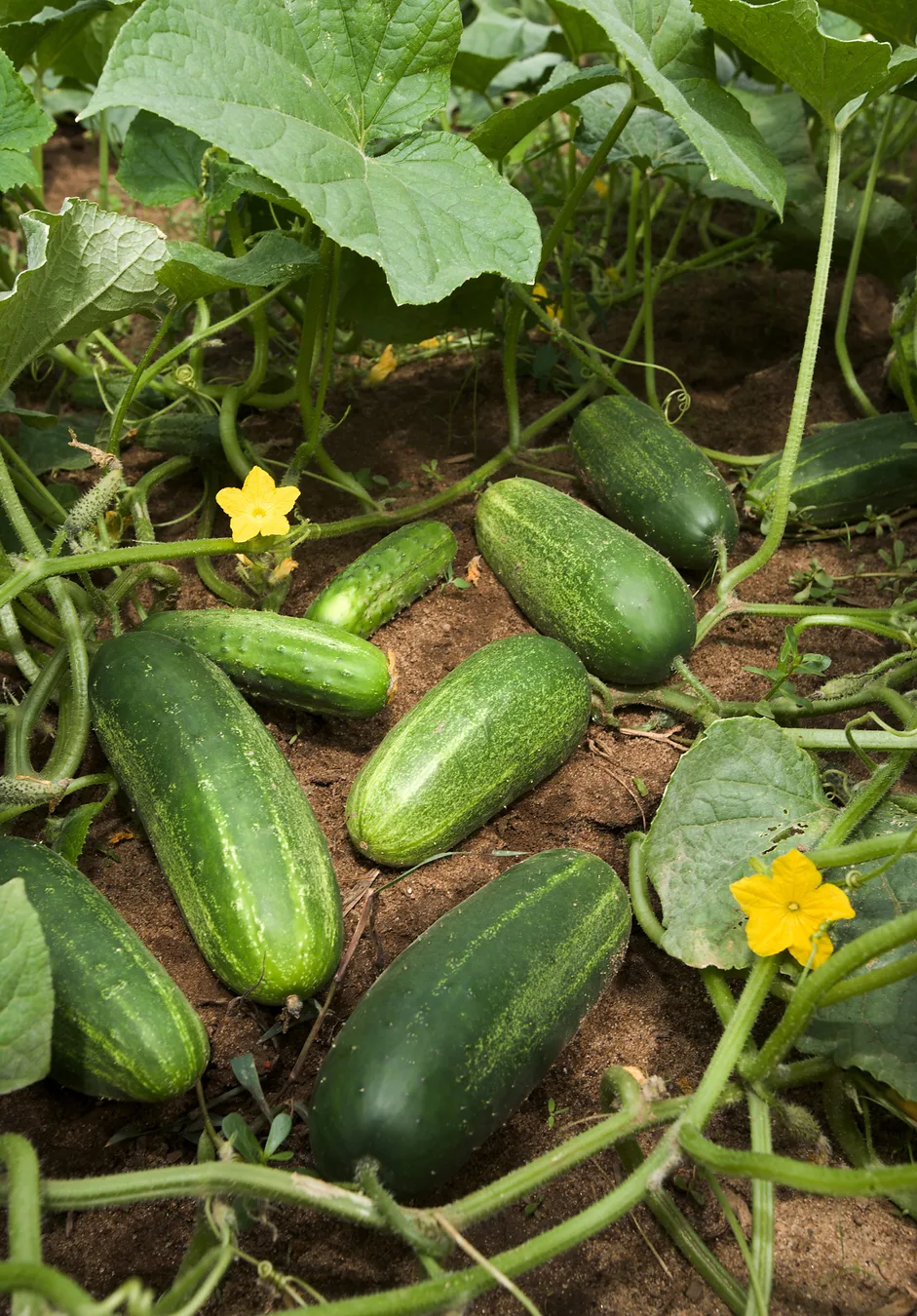
Cucumbers grow quickly when soil is warm and water is consistent. They are best harvested young and often.
When to plant
Choose a trellis or a place for vines to spread before sowing. Wait for warm soil and frost-free conditions; if transplanting, handle the roots carefully. The layout should let you see and reach fruit throughout the harvest.
Make room for the crop
A trellis changes where the vine grows, but it does not remove the need for root space or access. Mark the planting positions, anchor the support and picture the leaves at full size. Keep the harvest path open rather than squeezing in one more plant.
Water
Look below the leaf canopy when checking moisture. Record wilting separately from fruit size or yellowing: an overgrown cucumber is not by itself evidence of a sick vine. Use a regular picking route and keep watering observations beside the harvest dates.
Harvest
Check slicing types around six inches; follow cultivar size. Harvest reference: University of Minnesota Extension.
Use the maturity estimate to schedule a first inspection. Let the plant’s condition and the harvest you want decide the picking date.
Common problems
Inspect both surfaces of older and newer leaves. Keep fruit yellowing, leaf spotting and whole-vine wilt as separate observations; do not assume they share a cause.
Use the disease-condition checklist to decide what to inspect and which cultural conditions to improve. It does not identify a pathogen from these observations.
Field notes
A trellis makes cucumbers cleaner, easier to harvest, and less likely to disappear under leaves.