Make next season easier
The most useful change may be a wider path, a hose that reaches the far bed, or one fewer planting of a crop you rarely eat. Look back at the season through the work you actually did—not only the harvest you hoped for.
Start with one recurring frustration
| What kept happening? | A change to investigate | A result you can observe |
|---|---|---|
| Fruit hid behind leaves | A clearer picking route or a suitable support | Fewer missed, overgrown fruit |
| You stepped into the bed to weed | A narrower growing area or better access | Can you reach the middle from the path? |
| Seedlings emerged unevenly | Compare moisture and shade along the row | Emergence counts in marked sections |
| You grew more than you used | Smaller or staggered plantings | Useful harvest and food shared or wasted |
| One corner stayed wet | Track water movement after rain | Where water collects and how long it stays |
Choose one change you can follow. Changing the variety, bed, watering and sowing date together makes it difficult to learn which difference mattered.
Draw the awkward parts
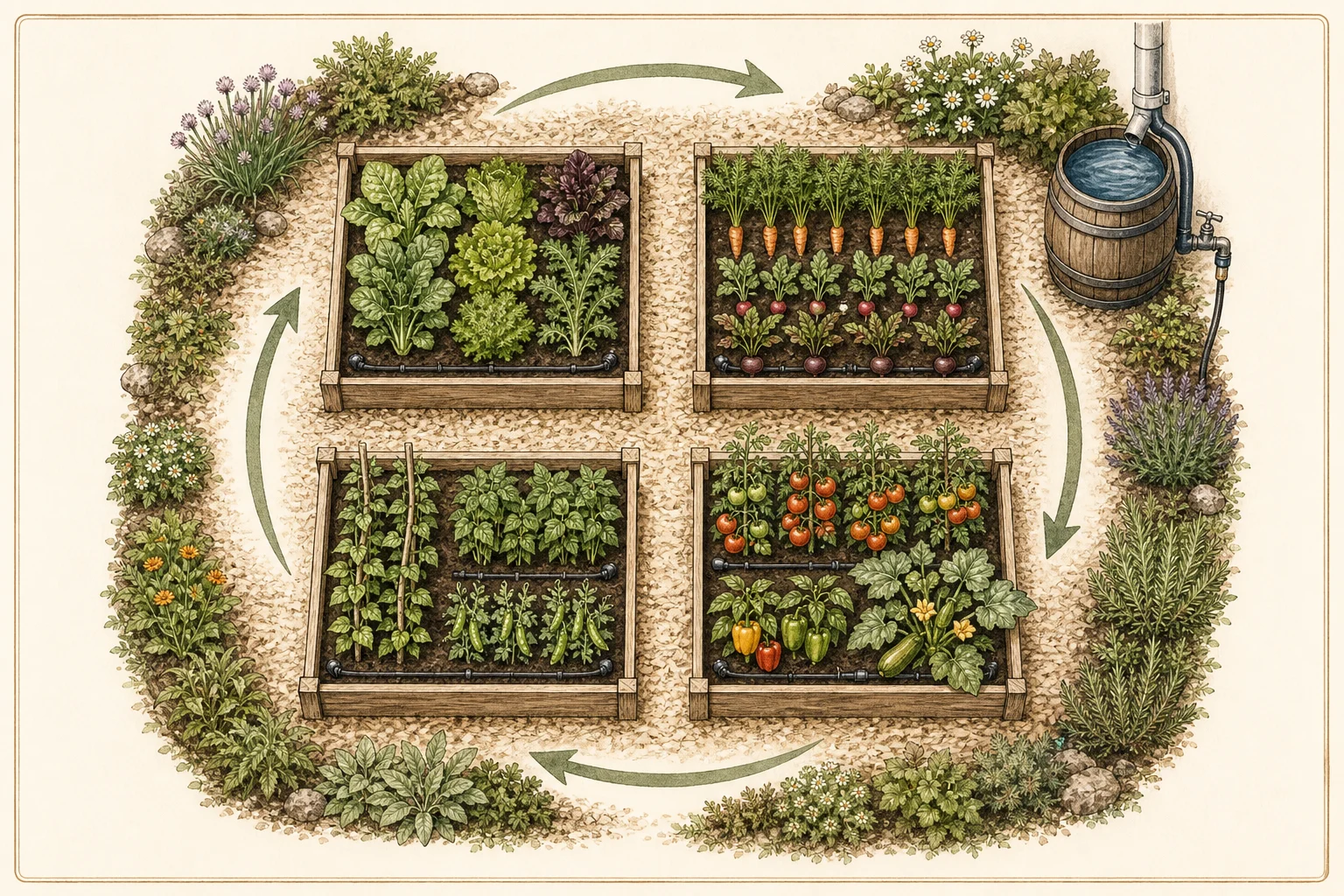
Use Studio to try an arrangement before moving materials. Keep a version of the original layout so you can compare what changed. Measure outdoors before relying on a sketch for construction.
Keep a small before-and-after record
In Garden Notebook, give the bed a consistent name and record a date, an observation and the next check. A photo taken from the same place can help you compare growth and access. Keep weather and variety changes beside the result: a better season does not by itself prove that your intervention caused it.
Carry the lesson forward
At the end of the season, choose what to repeat, what to stop and what still needs investigation. Follow a soil report when changing fertility, and compare growing-season weather when timing differed from your expectations.
The goal is a garden you understand and enjoy caring for. It need not become larger to become more useful.