Composting at Home
Compost is organized decay.
It takes what the garden no longer needs and returns it as a material the garden can use again.
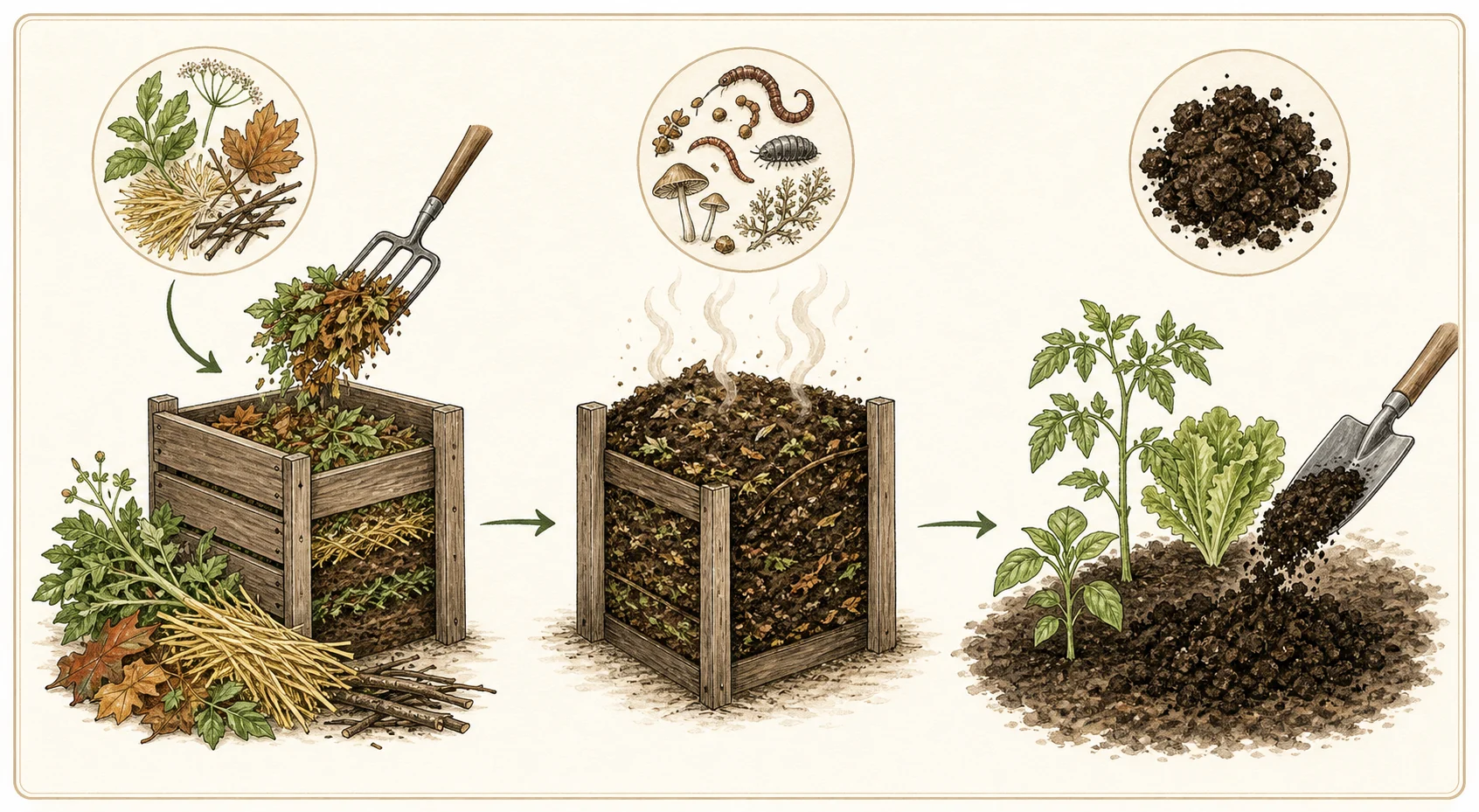
Greens and browns
Fresh grass, vegetable scraps, and green plant material provide nitrogen.
Dry leaves, straw, shredded paper, and woody stems provide carbon.
A good pile contains both.
Moisture
Compost should feel like a wrung-out sponge.
Too dry and the process slows. Too wet and the pile turns anaerobic.
Time
Compost does not need to be perfect.
Finished compost should be dark, crumbly, and earthy. If recognizable materials remain, sift them out or let them continue breaking down.
Field notes
Compost is less about waste disposal than garden memory. The remains of one season become the soil of the next.
Troubleshoot the process
| Observation | First thing to inspect |
|---|---|
| Dry, unchanged material | Moisture inside the pile, not just the surface |
| Soggy or unpleasant-smelling pile | Drainage, air space and the balance of dry and wet material |
| A few coarse pieces remain | Whether they need a separate round of composting |
Keep a small record of material added, moisture checks and turning. A home pile's appearance does not establish that it reached a temperature sufficient to destroy pathogens or weed seeds. For input choices and process guidance, use University of Maryland Extension's home composting guide.
Decide where the finished material goes
Measure the bed before spreading. Compost as a soil practice includes a volume calculator and explains why an application should reflect the soil report. Record the batch and quantity in Garden Notebook so you can compare future results.